In this article, we will look at how to choose a bearing by analysing several factors, and we will examine in detail the differences in durability and cost between ceramic bearings and steel bearings.
For several years, industrial electric motors have been designed to operate with steel ball bearings. People often find it difficult to implement an alternative solution when the one currently in use has been adopted for such a long time. Sometimes, it does not even matter whether the alternative is more innovative and offers better performance than the traditionally accepted option.
The same can be said for ceramic ball bearings and steel ball bearings, where steel ball bearings have been continuously used in motors for several generations. A better alternative is represented by ceramic ball bearings in all situations requiring high temperatures or frequent replacements.
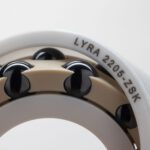
Among the different technologies available, ceramic bearings are one of the most interesting solutions for applications that require high performance, corrosion resistance and stability at high temperatures.
What are ceramic bearings?
In this article, we will look at how to choose a bearing by analysing several factors, and we will examine in detail the differences in durability and cost between ceramic bearings and steel bearings.
For several years, industrial electric motors have been designed to operate with steel ball bearings. People often find it difficult to implement an alternative solution when the one currently in use has been adopted for such a long time. Sometimes, it does not even matter whether the alternative is more innovative and offers better performance than the traditionally accepted option.
The same can be said for ceramic ball bearings and steel ball bearings, where steel ball bearings have been continuously used in motors for several generations. A better alternative is represented by ceramic ball bearings in all situations requiring high temperatures or frequent replacements.
Among the different technologies available, ceramic bearings are one of the most interesting solutions for applications that require high performance, corrosion resistance and stability at high temperatures.
Advantages of ceramic bearings
The use of ceramic materials in rolling systems offers a range of advantages that can help improve the performance and reliability of an industrial application.
The main benefits include high corrosion resistance, the ability to operate at higher temperatures than traditional bearings, reduced friction and greater wear resistance. The lower density of the material also helps reduce rotating masses, supporting operation at high speeds.
Another advantage concerns electrical insulation. In applications such as electric motors, inverters and high-speed systems, ceramic bearings can help limit the effects of stray currents which, over time, can damage the rolling surfaces of metallic components.
Ceramic bearings vs steel bearings
The choice between a ceramic bearing and a steel bearing depends on the operating conditions and the objectives of the application.
Steel bearings are a well-established solution for many industrial contexts thanks to their strength and lower cost. However, in the presence of high temperatures, corrosive agents, high speeds or specific electrical insulation requirements, ceramic materials can offer superior performance.
Ceramic materials have greater chemical resistance, lower thermal expansion and higher hardness than steel. These characteristics help reduce wear and degradation, contributing to a longer operating life of the system. The final assessment must always consider the entire application context, including loads, working environment, rotational speed and maintenance requirements.
Differences between steel bearings and ceramic bearings:
| Steel bearings | Ceramic bearings |
| More economical in the short term | Cost-effective in the long term |
| Expose motors to risks such as electrical arcing | Resistant to electrical current |
| Exposed to corrosion | Resistant to rust |
| Reduced longevity, as they are exposed to raceway damage | Can last up to ten times longer than steel bearings |
| Lower cage friction but higher rolling friction, even with lubrication | Lower rolling friction but higher cage friction |
- Rust resistance:
Even with regular lubrication, steel ball bearings are exposed to rust. Ceramic bearings, on the other hand, are fully resistant to corrosion. As a result, they reduce the likelihood of motor downtime and bearing failure. Ceramic ball bearings are designed to withstand extreme conditions without cracking or chipping.
- Minimised friction:
High-quality ceramic balls are usually manufactured to be lighter than steel balls. Motors with ceramic ball bearings can operate more efficiently because their use minimises friction by up to 40%. This also allows the machine to run faster, as the reduced weight of the bearing eases the load on other related components. In addition, the superior smoothness of ceramic ball surfaces requires less lubrication than steel bearings.
- Resistance to electrical current:
Bearings used in an electric motor controlled by a variable frequency drive tend to require better resistance to electrical current. Events such as electrical arcing can be avoided in motors fitted with ceramic bearings, unlike steel bearings, where the formation of micro-welding can increase mechanical resistance.
- Longevity:
In terms of longevity, ceramic ball bearings can last up to ten times longer than steel bearings in the same motor. Compared with steel bearings, ceramic balls are less subject to expansion and vibration. In addition, the smoother finish of ceramic bearings helps prevent raceway damage that could otherwise occur in steel bearings.
- Cost:
Steel bearings are less expensive than ceramic bearings. However, when considering the superior performance of the latter, they can prove to be the better option. The higher cost of ceramic bearings can be offset by their improved performance and longer service life.
Ceramic bearings for high temperatures
High temperatures represent one of the most critical operating conditions for any rolling system. An increase in temperature can affect lubrication, accelerate material wear and compromise the dimensional stability of components.
Thanks to the intrinsic properties of ceramic materials, these bearings can maintain high performance even in environments characterised by particularly severe temperatures. Their reduced thermal expansion and resistance to oxidation help limit deformation and loss of precision, which are essential aspects in many industrial processes.
For this reason, ceramic bearings are used in industrial furnaces, heat treatment plants, high-temperature handling systems and, more generally, in all applications where the limits of traditional materials can become a critical factor.
Industrial applications of ceramic bearings
The characteristics of ceramic materials make these components suitable for many industrial sectors where reliability and durability are essential requirements.
The most common applications include high-efficiency electric motors, industrial automation systems, the food industry, chemical and pharmaceutical plants, vacuum equipment and high-speed applications. Their corrosion resistance also makes them particularly interesting in the presence of humidity, aggressive chemicals or processes requiring frequent washing.
The ability to operate in conditions that would quickly challenge conventional materials helps improve plant reliability and reduce unscheduled maintenance.
Full ceramic bearings and hybrid bearings
In the world of ceramic rolling systems, two main configurations can be identified: full ceramic bearings and hybrid bearings.
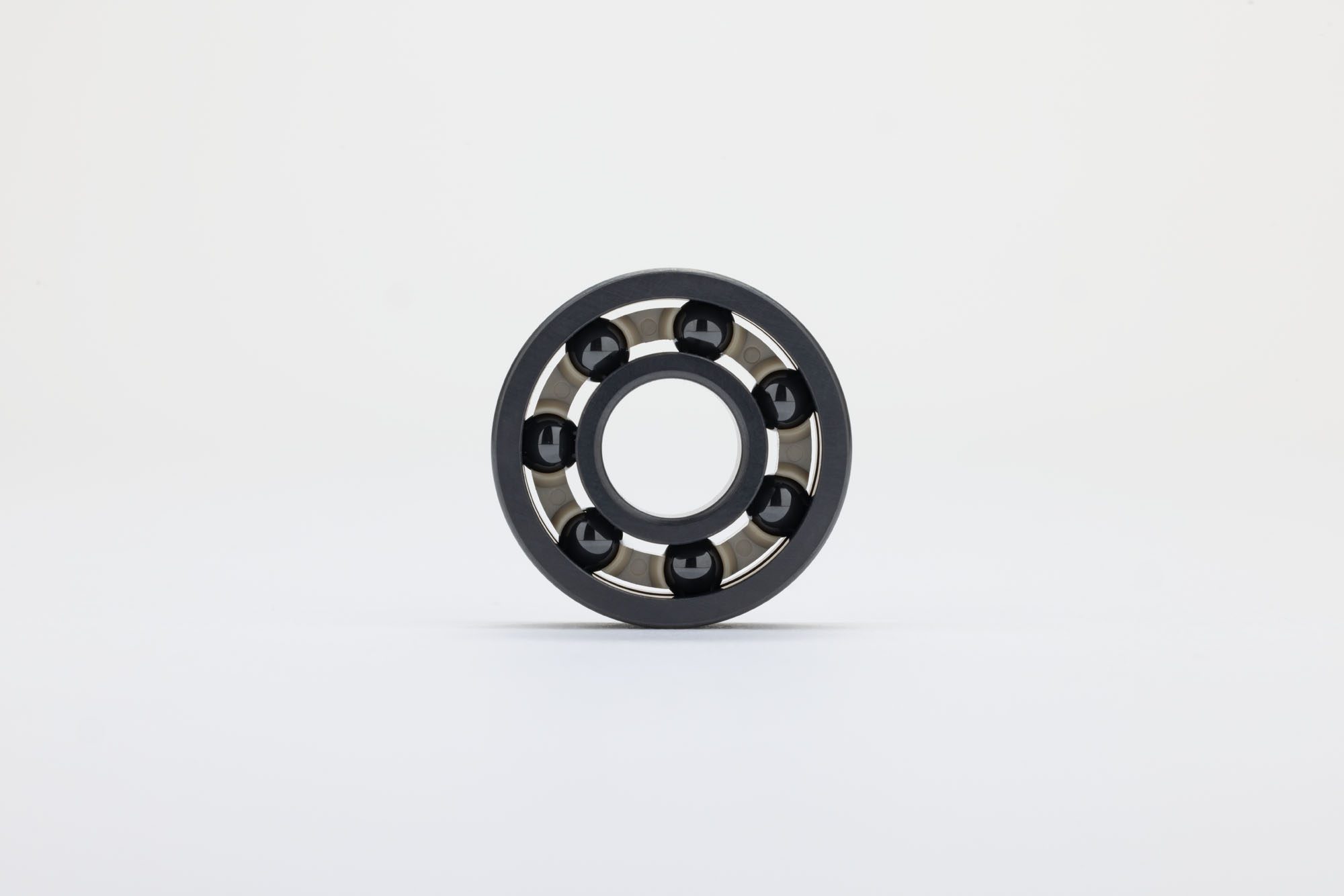
In full ceramic bearings, both the rings and the rolling elements are made of ceramic material. This solution offers maximum resistance to corrosion and high temperatures, making it particularly suitable for extremely aggressive environments or specialist applications.
Hybrid bearings, on the other hand, combine steel rings with ceramic balls. This configuration makes it possible to benefit from many of the advantages of ceramic materials, such as reduced friction and electrical insulation, while maintaining the mechanical characteristics typical of steel. For this reason, they often represent a particularly effective solution for electric motors, electrospindles and high-speed applications.
Ceramic bearing solutions for industrial applications
The choice of the most suitable material and configuration always depends on the operating conditions and the objectives of the application. Lyra Bearing develops ceramic bearings and rolling systems designed to meet specific requirements in terms of temperature, corrosion, speed, precision and operating life.